Veltrix Nexaro
Shifting Perspectives in Investment with Veltrix Nexaro
Sign Up now
 Veltrix Nexaro


Price does not drift without direction. It often forms around areas where buying or selling activity gathers. These zones act like magnets. Movement slows, pauses, or accelerates depending on how much interest builds there. When liquidity is thin, price can move faster. When activity is dense, movement often compresses before shifting again.
Relying only on past patterns can create confusion. A clearer view comes from examining how these zones develop over time. Watching how price moves between them gives better context. For example, repeated reactions at the same level may show strong interest, while weak responses may hint at fading activity.
Order flow adds another layer to this behaviour. The way orders enter and get absorbed can change direction quickly. Imagine a busy market level where large buy orders absorb selling pressure. Price may hold steady. But if those orders disappear, movement can turn sharp and fast in the opposite direction.
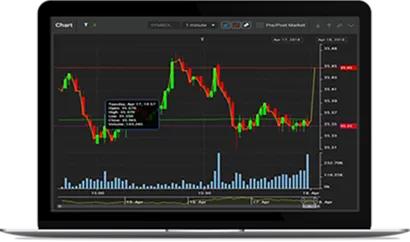
Market direction often forms through layers of positioning rather than isolated trades. Larger participants tend to build influence gradually, shaping how movement develops. Smaller participants usually respond after direction becomes visible. Ever noticed how a move starts quietly, then suddenly gains speed? That shift often reflects earlier positioning, not sudden action. Observing how these clusters build or fade can help explain why certain moves extend while others slow down within Veltrix Nexaro.

A starting point built on questions can turn curiosity into understanding. Veltrix Nexaro connects individuals with organizations that explain how markets function beneath visible movement. The focus remains on underlying processes rather than surface changes. Examining how liquidity forms or how order flow shifts can reveal what drives price behaviour. For example, a level where activity repeatedly gathers may show ongoing participation. This type of exposure provides a clearer base for continued learning without relying on assumptions.

Entering investment without a base can feel unclear. Price movement may seem disconnected without context. Learning ideas such as structure and liquidity helps explain these shifts. For example, repeated reactions at one level may reflect strong participation rather than coincidence. Recognising these behaviours allows new participants to interpret movement with more clarity. This approach builds a structured way to observe markets. Seeking guidance from financial professionals and continuing research can support more informed decision making over time.
First exposure to financial topics often begins by looking at how internal systems function rather than focusing only on results Veltrix Nexaro. Some learning settings explain how market activity forms through layers of participation, where different groups act based on separate intentions. These discussions focus on how liquidity is positioned and how that positioning shapes execution, instead of relying on visible price movement alone.

Price movement often reflects how activity is distributed across different levels. Learning discussions may show that areas with strong participation tend to hold attention, while quieter zones allow price to pass with less resistance. This shifts focus from surface changes to how interest is arranged within the market. Through this view, movement appears structured rather than scattered. Individuals can interpret how price responds at these levels and how participation affects continuation or slowdown. It can feel like watching queues at different shops, some stay crowded while others clear out quickly.
Looking at how individuals approach decisions can reveal why outcomes differ. Some follow fixed methods, while others adjust based on changing situations. Learning environments often analyse these approaches side by side within the same structure. This comparison shows that similar conditions do not always lead to the same result. Interpretation depends on how timing, structure, and exposure are applied. Evaluating these differences helps explain why outcomes vary even when the setup appears similar.
Learning discussions often focus on how exposure is handled instead of only where positions begin. Examining how positions are adjusted, reduced, or maintained across scenarios gives insight into how risk is spread. This approach highlights that behaviour in financial systems is shaped by how exposure is managed. Positioning decisions often carry more influence than individual actions. Reviewing these patterns and speaking with financial professionals can support a clearer understanding over time.
Different financial instruments operate within distinct structural settings Veltrix Nexaro. Some assets demonstrate gradual adjustments as participation evolves, while others react quickly due to concentrated capital involvement. Educational discussions often examine how categories such as commodities, currencies, and equities respond in unique ways, even when influenced by the same external factors.
Market structure is often shaped by the activity of larger participants Veltrix Nexaro. These participants typically do not enter positions instantly; instead, exposure is developed over time. This staged approach can often be observed through phases where positioning builds or reduces within specific price zones.
The way financial activity is interpreted depends heavily on the timeframe being analysed. Short duration observation tends to capture immediate adjustments in positioning, whereas longer duration analysis reflects broader capital allocation trends. Studying both perspectives shows how identical market structures can lead to different conclusions depending on the chosen timeframe.
Financial markets move through cycles where capital shifts between different conditions. Educational exploration may focus on how these transitions affect which sectors gain or lose attention over time. Observing these patterns reveals that financial movement is often connected to ongoing cycles rather than isolated events.
A deeper understanding of financial behaviour emerges when live market conditions are observed. Tracking how positions are introduced, adjusted, or closed provides clarity on how decisions evolve during active periods. This method highlights that market behaviour develops progressively, offering a clearer view of execution dynamics.
In today’s financial environment, effective decision making is less about speed and more about alignment with underlying market behaviour. A structured approach begins by examining where participation is expanding or contracting, offering clues about intent within the market. Instead of concentrating solely on price movement, focus is placed on how activity is distributed across different levels. This perspective helps identify emerging conditions before they become widely recognised.
Another key aspect involves recognising how decision frameworks adapt under varying conditions. Market behaviour can differ when participation is clustered in specific areas compared to when it is more evenly spread. These shifts influence how opportunities are perceived and evaluated. Exploring such contrasts supports a more adaptive mindset, reducing dependence on rigid responses.
Consistency is also closely tied to maintaining a disciplined process. Rather than reacting to every short term fluctuation, a structured approach emphasises waiting for alignment between positioning and overall conditions. This patience encourages more deliberate execution. Over time, such a method strengthens the ability to interpret financial activity, leading to decisions guided by structure and intent instead of immediate impulses.

Daily work patterns often consist of repeated actions that offer opportunities for ongoing development. Instead of treating learning as a separate activity, individuals can evaluate how tasks are carried out and look for areas that can be improved.
For instance, reviewing how time is allocated may highlight habits that impact efficiency. Refining these patterns allows learning to become part of regular workflow rather than an additional effort.
Balancing routine obligations with skill development requires a structured mindset. One effective approach is to use existing responsibilities as a foundation for improvement. While handling familiar tasks, small adjustments can be introduced and assessed without disrupting overall performance. This method supports steady growth without increasing workload pressure.
Skill development often comes from continuous, minor refinements rather than major changes. Modifying how tasks are prioritised, organised, or executed can gradually enhance outcomes. Breaking larger processes into manageable steps makes it easier to evaluate and improve each part. Over time, these incremental changes contribute to a more effective and adaptable way of working.
Every task produces results that can be analysed for improvement Veltrix Nexaro. Reviewing outcomes helps determine which methods are effective and where challenges arise. This process creates a feedback loop that supports ongoing development and encourages more informed adjustments in task execution.
Repeated exposure to similar tasks provides a structured way to strengthen skills. By applying slight variations and observing differences in results, individuals can deepen their understanding over time. This consistent practice enhances confidence and transforms routine work into a process of continuous refinement and improvement.

Financial learning does not have to be limited to scheduled study time. A practical understanding can develop by observing market activity alongside regular daily routines. Brief periods of focused attention, such as noticing how liquidity shifts or how positioning changes, can gradually build deeper awareness over time.
This method encourages an ongoing learning process rather than confining it to specific sessions.
With consistent exposure in short intervals, focus begins to shift away from basic price movement toward underlying behaviour. For instance, tracking how order flow changes at different times of the day can reveal patterns that may not be visible during extended observation. As these small observations accumulate, they contribute to a more structured and applied understanding of how markets function.
Financial environments are constantly evolving, making adaptable learning approaches more effective. Gaining knowledge through real time observation allows individuals to stay aligned with current developments rather than depending solely on pre planned study periods.
For example, tracking how positioning adjusts during transitions between market phases can offer context that may not be fully captured through later review.
This method also supports evaluating multiple situations side by side. Observing how similar conditions behave differently under changing circumstances highlights variations in execution instead of reinforcing a fixed perspective. As these insights accumulate, they help build a broader and more adaptable understanding of financial behaviour.

Small, focused observations can significantly improve understanding of how decisions take shape. Rather than looking only at final outcomes, attention can shift toward how market participants adjust exposure, manage trades, and respond to changing conditions. This approach reveals that decision making varies depending on context rather than following a single pattern.
With repeated observation of these brief moments, connections between timing, exposure, and behaviour become clearer. Over time, this helps illustrate how decisions develop progressively, rather than appearing as isolated actions.
Observing markets in real time also brings greater clarity to risk. Instead of treating risk as a fixed concept, it becomes something that can be seen evolving across different conditions. For example, noticing how exposure behaves near areas with lower liquidity can show how risk levels expand or contract depending on placement within the market.

Educational concepts provide a structured foundation, but their true value emerges when applied to active market environments. For instance, identifying liquidity zones may suggest where activity could develop, yet actual price movement depends on how orders are executed within those areas.
Whether movement continues or stalls is influenced by participation, not just recognition. This demonstrates that real understanding comes from observing how structure operates in practice.
Financial perspectives are often influenced by interpretation rather than direct evidence. A viewpoint may seem valid until it is compared with how positions are actually formed or adjusted. Aligning ideas with observable behaviour allows for a clearer assessment of whether analysis reflects real market activity. This approach helps separate assumption from execution, encouraging a more evidence based method of thinking.
While structural analysis offers useful context, it does not eliminate uncertainty. Some market conditions present clearer formations, while others show overlapping signals that make interpretation more complex. In such cases, attention shifts toward how participants handle exposure instead of expecting consistent patterns. This highlights that structure provides guidance, but outcomes depend on how each situation is interpreted.
Larger participants typically build positions over extended periods rather than acting instantly. This process may appear as steady activity within a defined range, yet the shift toward expansion is not always clearly visible in advance. Observing how positioning develops can offer insight into intent, but precise timing remains uncertain. This reinforces that behaviour can be studied, while outcomes continue to evolve.
Market participants interpret the same conditions differently based on their goals and strategies. Some focus on steady exposure with controlled risk, while others engage with shorter term movements. These differences influence how structure is analysed and applied. Comparing such approaches shows that decision making is shaped by individual priorities, where timing, risk management, and positioning vary accordingly.
Economic changes tend to influence how capital is distributed rather than directly determining price direction. When borrowing conditions shift, participants often adjust where funds are placed, moving between sectors that offer stability and those positioned for expansion.
This reallocation reflects how financial structures evolve over time, as participation increases or decreases across different areas, gradually shaping overall market behaviour.
| 🤖 Signup Expense | Completely free registration |
| 💰 Charges Applied | No hidden charges |
| 📋 Sign-Up Method | Straightforward, fast registration |
| 📊 Educational Topics | Focused learning in Cryptocurrency, Forex, and Investments |
| 🌎 Countries Available | Operational in most countries, excluding the USA |